
Killer Instinct story
Killer Instinct smells like the ’90s in the best way—sweet arcade haze, the clatter of coin slots, and that gravel-throated announcer stomping out of the speakers like a stampede: Ultra Combo! C-c-c-combo breaker! It hit arcades first and instantly became “that” fighter—where hits poured into rivers of combos and fighters looked like glossy video-store posters come alive. The Brits at Rare pulled off something that sounds simple only on paper: they bottled arcade swagger, mixed in big-screen spectacle, and let a new attitude off the leash. On players’ tongues the name shifted—some leaned into Killer Instinct, others just said KI, a few even joked “Instinct of a Killer”—and every version felt like the password to a club that lives for show-stopping bouts.
From arcades to the living room
The cabinet teased a home release and a bold new console, but in the end it was the SNES version that built the bridge and brought KI home. The day you held that black cartridge—a rarity for the era—it felt like your console suddenly grew up. Sometimes the box even came with Killer Cuts, a soundtrack CD that blasted from boomboxes as confidently as any Eurodance tape. That moment you flip the power, see the Rare logo, and Fulgore’s searchlight eyes lock on you—that’s the short story of how an arcade headliner moved in next to the TV.
You can tell its origin story without dates, just snapshots. Rare already knew how to sculpt “living” silhouettes—pre-rendered, shiny, like toys in a shop window—and then decided a fighter could feel like that too. Not a barroom brawl, but a precision dance where every link, every cancel, snaps into place with the announcer’s cadence. Then they tossed in cheeky finishers—No Mercy—and even Humiliation, where, after a grueling set, you make your rival dance. Smart, brazen, instantly lovable.
Heroes you recognize by their footsteps
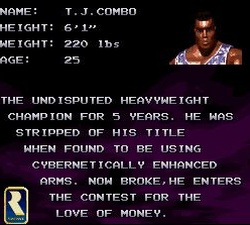
Killer Instinct quickly built its own pantheon. Jago, all steady stance and sure blade; Orchid, understated but lethal; Fulgore, the cyber-gladiator from tomorrow; Sabrewulf, a beast echoing classic horror; Spinal, a cassette-cover skeleton pirate; Glacius, whose ice shatters like glass; Riptor, TJ Combo, Chief Thunder—each brought their own rhythm. And, of course, Eyedol—the boss whose very name growled with primal threat. But it wasn’t just the looks: their styles fused into that juicy “song” of hits where you chase your tempo, your signature Ultra, and the precise instant when an opponent pressing forward runs headlong into your Combo Breaker.
Back when KI was “arcade only,” it spread by word-of-mouth, face to face: “The combos don’t stop,” “the announcer yells so hard the walls shake,” “you can finish by making them dance.” With SNES, the legend moved into apartments, dorms, and basement game rooms. The memories are of two friends dragging a table closer to the TV, drilling links till knuckles popped, and yelling when the Spinal Ultra finally landed. It was small-scale happiness—and it worked downtown, in the suburbs, anywhere there was a cart shop and kids ready to trade.
Why we fell for it
Few games explain why they deserve your love this cleanly. It hooked fast: that after-hours fight vibe, music that felt like a club mix, and a dare—don’t just finish, finish with flair. Killer Instinct staged the fighter as a show, complete with a host (that unmistakable voice), its own directing, and the final ovation when Ultra splashes across the screen. Under the gloss was cozy familiarity: a couple buttons, a couple whiffs, a read, spin up a string… and suddenly you feel like you own the ring. It was great to watch from the couch, and even easier to fall for once a pad hit your hands.
The SNES port wasn’t a facsimile—it was a truthful home edition with its character intact. The loud announcer, the long strings, the trademark No Mercy—they were all there. Some of us heard the sacred “Combo Breaker!” at home for the first time—and that was enough to call this port canonical. And that black cartridge—something out of a display case—a small trophy carefully moved from box to box.
How it spread across the world
Killer Instinct tore through arcades fast—lines formed and stuck. After SNES, it traveled even wider: boxes passed hand to hand at shops, clubs ran first-to-three brackets, and in schools people debated how to pull Glacius’s Ultra and what to do against TJ’s pressure. Across Russia and neighboring countries, KI picked up its own folklore: borrowing a cart “for the weekend” and disappearing through the holidays, memorizing the roster by heart, recording Killer Cuts onto a cassette and letting it loop. That’s how a cult forms—no grand slogans, just game nights, noisy arguments, and the rush when you finally hit that move you’d only seen in a magazine.
Today the name comes in many flavors—Killer Instinct, “Instinct of a Killer,” “Killer Instinct,” sometimes just “KI”—but every version carries the same feeling. It’s a password to an era when fighters were a party, and combos weren’t just on-screen counters but a story about style and persistence. It’s warm muscle memory—learning the beat, catching the moment for a Combo Breaker, flipping the script. Which is why its history isn’t a pile of facts, but a timeline of personal wins, black cartridges, friends on a couch, and that voice living rent-free in your head.